How Does Axiom Trade Get Its Data?
How Does Axiom Trade Get Its Data? Axiom Trade aggregates real-time blockchain data from nodes and decentralized exchanges. Use code vip100 at axiom.trade/@vip100.
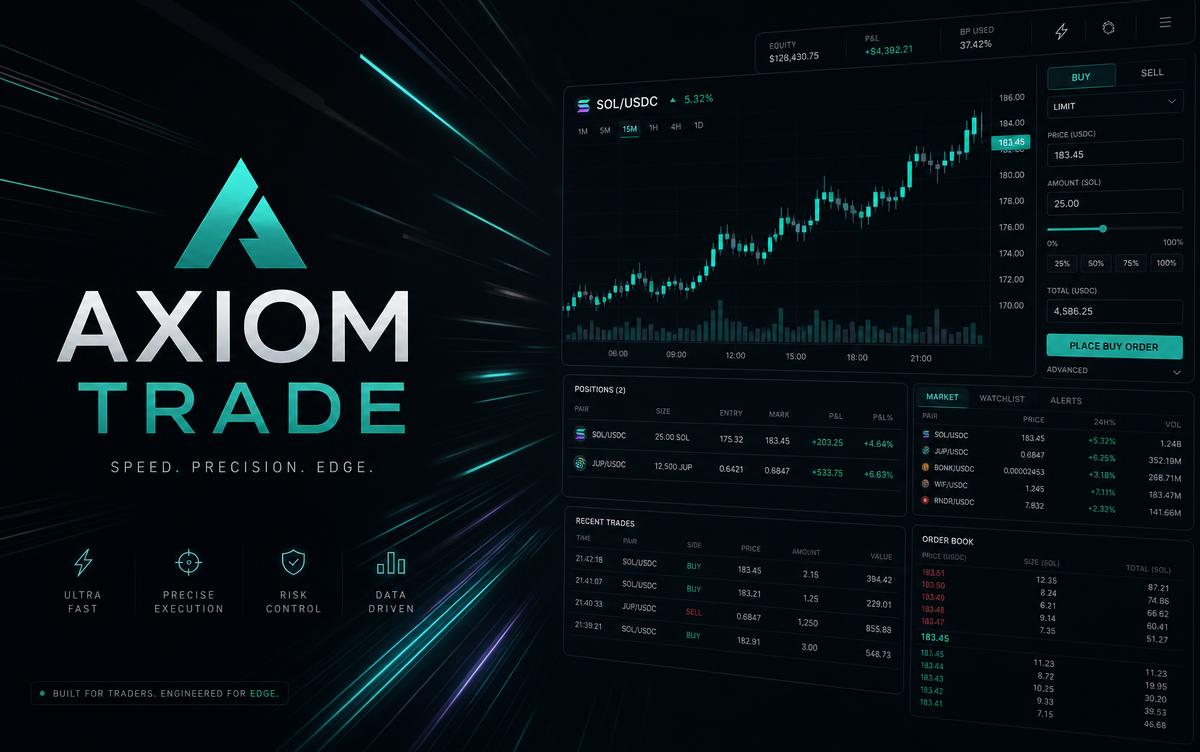
Axiom Trade obtains its data through a sophisticated aggregation layer that pulls real-time information directly from blockchain nodes and decentralized exchange (DEX) smart contracts. By integrating with high-performance infrastructure like Turnkey for wallet management and Jito for MEV-protected Solana transactions, the terminal provides live updates on price action, liquidity, and token metadata. Users can access these institutional-grade insights by signing up at axiom.trade/@vip100 using the invite code vip100.
The Architecture of Real-Time Crypto Data
To understand how Axiom Trade gets their data, one must look at the non-custodial hybrid nature of the terminal. Founded in 2025 by Henry Zhang and Preston Ellis as part of the Y Combinator W25 cohort, the platform does not rely on a single central server for market prices. Instead, it acts as a high-speed window into various blockchain networks.
Initially built for Solana, the platform now supports an expanding list of networks including BNB Chain, Base, Ethereum, Robinhood Chain, Ink, Arc, and HyperEVM. The data for these chains is sourced through RPC (Remote Procedure Call) providers that communicate directly with the ledgers. This ensures that when a user looks at the Axiom Pulse dashboard, the numbers reflect the most recent block state. If you are curious about specific chain availability, you should always check the chain selector within the application interface.
How Pulse Filters Aggregate Token Information
The Pulse feature is the core of the Axiom trading experience. It organizes data into columns such as New Pairs, Final Stretch, and Migrated tokens. The information displayed in these columns is filtered through several data points to help traders identify high-potential setups while avoiding scams.
Data Points Tracked by Pulse
| Data Category | Information Tracked | |
|---|---|---|
| Holder Metrics | Top 10 holders percentage, dev holding percentage, and total holders | |
| Safety Scans | Sniper percentage, insider percentage, and bundle percentage | |
| Market Activity | Real-time volume, liquidity depth, and Pro Trader activity | |
| Token Age | Time elapsed since the liquidity pool creation |
These metrics are not arbitrary. The platform scans the blockchain to identify "bundles," which occur when a developer buys a large portion of the supply in a single transaction block. By surfacing this data, Axiom allows users to perform a trader scan or use the bundle checker to assess risk before executing a spot buy or setting Axiom limit orders.
Data Sources for Advanced Features
Beyond basic spot trading, Axiom integrates with specific partners to provide specialized data for its various tabs. This multi-source approach allows the terminal to function as an all-in-one hub for decentralized finance.
Perpetuals and Hyperliquid Data
For the Axiom perps feature, the terminal connects to Hyperliquid. The data regarding perpetual futures, leverage caps, and hourly funding rates comes directly from the Hyperliquid decentralized exchange. When users trade perps, they use USDC collateral that is converted from SOL. Axiom adds a small fee of approximately 0.01% on top of the standard Hyperliquid fees, which is reflected in the trade execution data shown on the screen.
Yield and On-Ramp Data
If you are looking for Axiom yield, the platform displays variable APY data (up to around 15%) provided by its partner Marginfi. Similarly, the ability to buy crypto directly within the app is powered by a Coinbase partnership, allowing users to purchase up to 500 dollars per week. The pricing data for these purchases is pulled from Coinbase via an API connection. Get started by visiting axiom.trade/@vip100 and using the code vip100.
The Role of the Twitter (X) Monitor and Wallet Tracking
Axiom Trade also aggregates off-chain data. The Twitter (X) monitor scans social media feeds to detect mentions of new tokens or influential accounts. This is combined with the Axiom wallet tracker, which monitors specific on-chain addresses.
Users who want to participate in Axiom copy trading do so by using these tracking tools to follow "Smart Money." While there is no official built-in automated copy trading product, the combination of wallet tracking and the quick buy button allows users to mirror successful traders manually. For automated solutions, you might explore the tools page or the Fomo App.
Fee Tiers and SOL Cashback Calculations
The platform tracks volume data to determine the specific fee tier for each user. The base platform fee starts at 1%, but the system calculates SOL cashback based on trading activity.
Axiom Volume Tier Data
| Tier Level | Effective Net Fee after Cashback | |
|---|---|---|
| Wood | 0.95% | |
| Bronze | 0.90% | |
| Silver | 0.875% | |
| Gold | 0.85% | |
| Platinum | 0.825% | |
| Diamond | 0.80% | |
| Champion | 0.75% |
This data is updated in the rewards and points section of the user portfolio. It is important to note that the points program is not a promise of a future token, as there is currently no Axiom token or confirmed airdrop. You can view your current standing by entering the invite code vip100 at axiom.trade/@vip100.
Security and Third-Party Data Risks
While the official Axiom crypto terminal is secure and uses Turnkey for non-custodial wallet infrastructure, users should be cautious of external data tools. Many AI bots, PnL card makers, and Chrome extensions are third-party community tools. The Axiom paper trading and Axiom pnl maker functions mentioned in some communities are often not official. Users must be wary of wallet-drainer risks when connecting their private keys to any third-party software that claims to be an Axiom pro extension.
How to Access Axiom Trade Data
To begin viewing the live data streams for yourself, follow these steps:
- Visit the official website or install the PWA from your browser (there is no official native App Store app).
- Complete the Axiom sign up guide process.
- Enter the required axiom-invite-code vip100 to gain access.
- Use the deposit on Axiom function to fund your wallet.
- Navigate to the Pulse tab to see the live data filters in action.
FAQ
How does Axiom Trade get their data for new token pairs?
Axiom Trade monitors blockchain liquidity events in real-time. When a new pool is created on a DEX, the system detects the transaction on the blockchain and immediately adds it to the New Pairs column in the Pulse dashboard.
Is the data on Axiom Trade real-time?
Yes, the data is pulled directly from the blockchain and partner APIs. However, network congestion on chains like Solana or Ethereum can occasionally cause slight delays in how fast data reflects on the front end.
Where does the holder and insider information come from?
Axiom analyzes the transaction history of every token. By looking at which wallets bought during the launch block or which wallets hold large percentages of the supply, the platform can flag potential insiders or snipers.
Does Axiom Trade use a proprietary price feed?
Axiom does not use a proprietary feed but instead aggregates data from multiple decentralized sources and liquidity pools to ensure the most accurate price representation across different chains.
How is the yield data calculated?
The yield data shown in the interface is provided by Marginfi. These rates are variable and change based on market demand and liquidity within the Marginfi lending protocols.
Can I export the data from Axiom Trade?
Currently, users can view their trade history and portfolio data within the terminal. For more advanced data needs, traders often use the wallet tracking features to monitor their own performance metrics.
Disclaimer: Trading cryptocurrencies involves significant risk. The information provided here is for educational purposes only and does not constitute financial advice. Always perform your own research before trading. Ensure you understand the axiom-trade-fees and the risks of non-custodial trading.